
Mastering Your Short Game: Unlock Lower Scores with Chipping and Pitching Techniques
March 30, 2026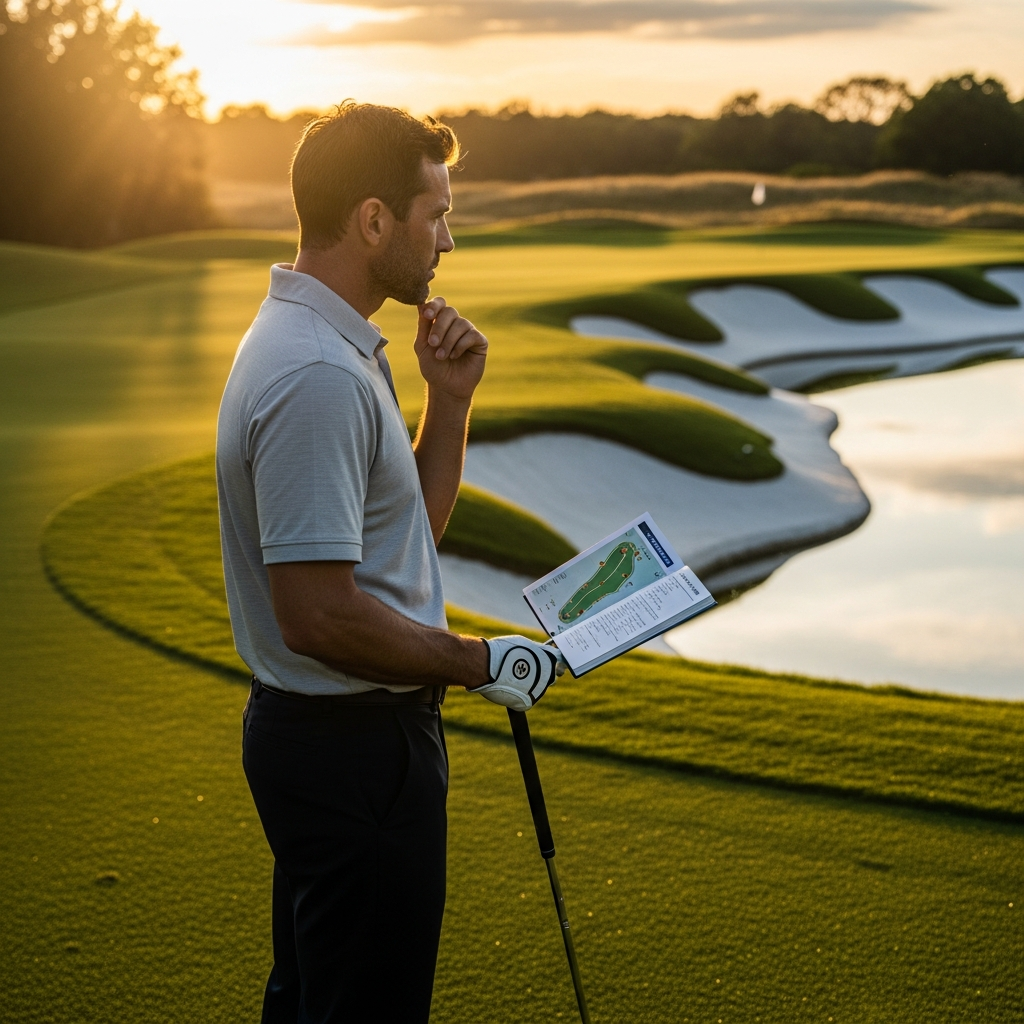
Strategic Golf: Course Management for Consistently Better Rounds
March 31, 2026
Know Your Distances, Not Just Your Maximums
Many amateur golfers base their club selection on that one time they hit their 7-iron 170 yards, completely ignoring the fact that their true average is closer to 155 yards. Effective golf course management starts with a brutally honest assessment of how far you actually hit the ball on a typical, everyday swing, not just your absolute best strike. When you know your true average distances, you immediately reduce the number of shots that come up notoriously short, landing in front bunkers, deep rough, or water hazards. It is also crucial to understand the difference between carry distance and total rollout. Furthermore, weather conditions, elevation changes, and turf firmness play a significant role in every single shot you hit. If you are constantly coming up short of your target, try taking one more club, choking down slightly, and making a smooth swing. A well-struck, controlled swing is vastly more accurate than trying to jump out of your shoes. This simple adjustment shifts your mindset from wishful thinking to calculated execution, consistently leaving you with manageable putts for par instead of scrambling for bogeys.
Play the Percentages Off the Tee
The driver is undeniably the most fun club in the bag, but it is also the quickest way to completely ruin your scorecard early in the round. One of the biggest mistakes amateurs make is automatically pulling the big stick on every par 4 and par 5 without first assessing the inherent risks of the hole. If a fairway is particularly tight, lined with out-of-bounds stakes, or heavily guarded by fairway bunkers right where your driver typically lands, it is definitely time to rethink your tee shot. Opting for a 3-wood, hybrid, or even a driving iron can significantly increase your fairway hit percentage. As highlighted in a recent strategy breakdown by Golf Digest, the world’s best players meticulously calculate risk and reward off the tee, often clubbing down to ensure a clear and manageable second shot. The primary goal is not just to bomb it as far as possible, but to position yourself strategically for your approach to the green. By intentionally keeping the ball in play and avoiding penalty strokes, you eliminate those catastrophic blow-up holes that destroy your overall score.
Aim for the Center of the Green
It is incredibly tempting to aim directly at the flagstick, especially when it is tucked behind a deep bunker or perched precariously close to a lateral water hazard. However, unless you are holding a wedge and feeling remarkably confident about your swing, pin-hunting is a dangerous game that usually leads to short-sided chips and unnecessary dropped shots. Mastering golf course management means developing the strict discipline to aim for the center of the green on the vast majority of your approach shots. The center of the putting surface is the widest, safest target available to you. Even if you miss your intended line slightly, you are still highly likely to be putting or facing a relatively straightforward chip shot. A 25-foot putt for birdie from the middle of the dance floor is always a better scenario than attempting a heroic, high-risk flop shot from deep rough just to save par. Over the course of 18 holes, this conservative yet highly effective approach will drastically reduce your mistakes, limit your on-course frustration, and keep your momentum moving in a positive direction.
Accept Your Mistakes and Take Your Medicine
We all hit terrible shots; it is simply an inevitable part of the game that even seasoned professionals must navigate during every tournament. However, the distinct difference between a high-handicapper and a scratch golfer lies entirely in how they react to those errant swings. The true test of golf course management occurs right after you have hooked your ball deep into the trees or sliced it into an adjacent fairway. Instead of attempting a miraculous, one-in-a-million shot through a tiny gap in the branches, the remarkably smart play is to swallow your pride, pitch the ball safely back into the fairway, and graciously accept the bogey. Trying to pull off the impossible usually results in hitting another tree, compounding your errors, and turning a manageable five into a devastating eight. According to an insightful analysis on mental errors in golf published by ESPN, emotional decision-making is a leading cause of ruined rounds for amateurs everywhere. Playing smart means recognizing when you are out of position and actively prioritizing damage control over highlight-reel heroics.
Map Out Your Strategy Before You Arrive
The absolute best time to make strategic decisions about how to play a specific hole is long before you actually step onto the tee box. Thanks to modern technology, we now have unprecedented access to satellite imagery, detailed yardage books, and highly accurate GPS applications that allow us to study a course layout from the comfort of our own homes. Developing a clear, comprehensive plan of attack before you even arrive at the clubhouse is an essential component of golf course management. You should be proactively identifying where the most severe trouble lies, noting which side of the fairway offers the best offensive angle to the green, and deciding beforehand which par 5s are realistic two-shot targets and which ones strictly require a strategic lay-up. Having a solid game plan eliminates costly indecision and performance anxiety when you are finally standing over the golf ball. While you must remain flexible enough to adapt to changing wind conditions or an unexpected bad lie, starting with a foundational blueprint gives you tremendous confidence and mental clarity.
Conclusion
Shooting consistently lower scores is rarely about hitting perfect, picturesque shots every single time you swing a club; rather, it is about cleverly minimizing the damage when things inevitably do not go exactly as planned. By choosing to play the percentages off the tee, knowing your true and realistic yardages, aiming strictly for the center of the green, and checking your ego at the door after a bad shot, you will drastically improve your scoring baseline. Strategy is the ultimate equalizer on the fairway. So, before you head out for your very next round, take a few minutes to map out your approach and firmly commit to playing the smartest game possible. Are you ready to stop letting bad decisions ruin good swings? Leave a comment below with your favorite strategic on-course tip, and don’t forget to share this article with your regular playing partners to help them shave a few frustrating strokes off their game, too!